Cart
0
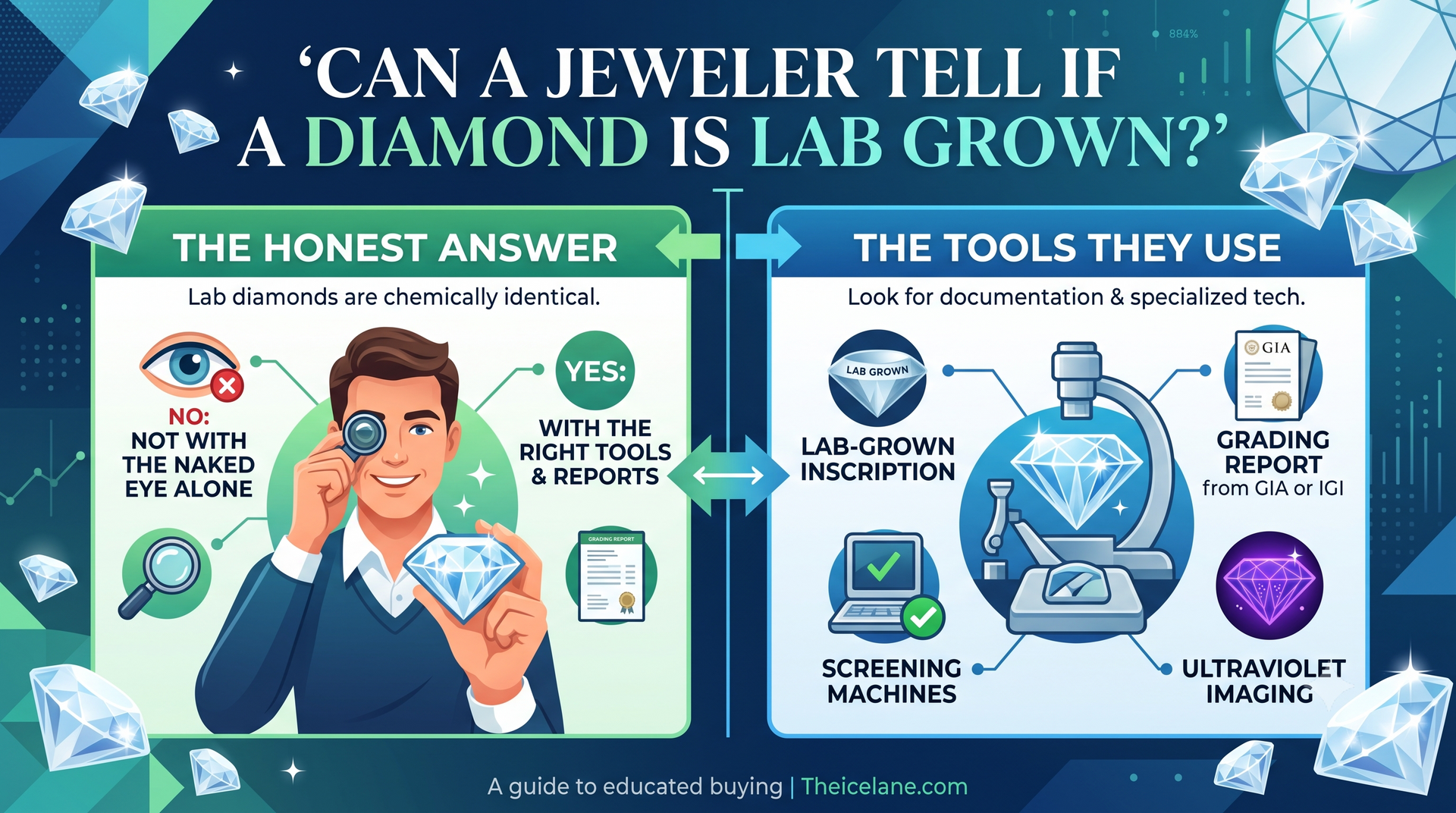
A good jeweler cannot reliably spot a lab grown diamond with the naked eye, but the right jeweler can tell if a diamond is lab grown with instruments, inscription checks, and a proper grading report.
That distinction matters. Lab grown diamonds are real diamonds: crystallized carbon, the same 10 on the Mohs scale, the same sparkle when cut well. What separates them from mined stones is origin, not “fake versus real.” If you are comparing rings or earrings from brands like Theicelane, start with a curated selection of lab grown diamonds a jeweler can identify with the right report, then judge the stone by documentation, cut quality, setting, and price transparency.
So, can a jeweler tell if a diamond is lab grown?
Yes — but usually not by looking at it across the counter.
A trained jeweler or gemologist can often confirm whether a diamond is lab grown by using a combination of:
- A loupe or microscope to check the laser inscription on the girdle
- A grading report from GIA, IGI, GCAL, or another reputable lab
- Screening tools designed for synthetic diamond detection
- Advanced spectroscopy or UV imaging for unclear cases
What they cannot do, at least not honestly, is glance at a well-cut VS or VVS lab diamond in a prong setting and say, “That’s lab grown,” based on sparkle alone.
That is where people get misled. A diamond tester from a mall kiosk may confirm “diamond,” but that does not prove natural origin. Standard thermal conductivity testers were built to separate diamond from simulants like cubic zirconia, not to separate CVD and HPHT diamonds from mined diamonds.
What a jeweler checks first
The first thing a careful jeweler looks for is boring but powerful: documentation.
A lab grown diamond is commonly sold with a grading report that states its origin clearly. IGI reports, for example, usually say “laboratory grown diamond” and list the growth method when available. GIA reports also identify laboratory-grown stones and include the 4Cs: carat weight, color, clarity, and cut.
Next comes the girdle inscription. Many certified diamonds have a microscopic laser inscription around the outer edge of the stone. Under magnification, it may show the report number and sometimes wording such as “LABGROWN” or “LG.”
If the diamond is loose, this is straightforward. If it is already mounted in a ring, prongs, bezels, or halo settings can hide part of the girdle. A jeweler may still find the inscription, but not always without patience — and occasionally not without removing the stone.
For contrast, shoppers who want to compare origin, pricing, and grading language side by side can also look at documented natural diamond pieces to see how certificates and value factors differ in real listings.
The tools that separate “real diamond” from “lab grown diamond”
Here is the practical breakdown. Not every local jeweler owns every device, so the answer depends on the shop.
| Detection method | What it can show | Typical time needed | Common limitation |
|---|---|---|---|
| 10x loupe or microscope | Girdle inscription, inclusions, facet wear | 2–10 minutes | Inscription may be hidden by setting |
| Thermal diamond tester | Diamond vs. many simulants | Under 1 minute | Cannot reliably separate lab from natural |
| Electrical conductivity tester | Helps flag moissanite | Under 1 minute | Not a lab-origin test |
| UV fluorescence observation | Unusual glow or phosphorescence patterns | 2–5 minutes | Not conclusive alone |
| Synthetic diamond screener | Flags stones needing further testing | 1–5 minutes per stone | Some stones require advanced lab testing |
| FTIR or photoluminescence spectroscopy | Growth-related defects and trace elements | 10–30+ minutes | Usually found in gem labs, not small shops |
| DiamondView-style UV imaging | Growth patterns, CVD/HPHT clues | 10–20 minutes | Specialized equipment |
A good jeweler knows when to stop guessing. If the stone is valuable and the evidence is unclear, sending it to a lab is the grown-up answer.
Why the naked eye is almost useless here
Lab grown diamonds are not glassy imitations. They are not moissanite. They are not cubic zirconia.
A well-cut lab diamond can have excellent fire, brightness, and scintillation. A poorly cut natural diamond can look sleepy. Origin does not automatically determine beauty.
The naked-eye myth usually comes from older assumptions about “perfect” stones. People sometimes believe that if a diamond has very few inclusions, it must be lab grown. Not true. Natural diamonds can be internally flawless; lab diamonds can have inclusions, graining, strain patterns, or tiny metallic flux remnants depending on how they were grown.
CVD diamonds may show growth striations or graining under certain conditions. HPHT diamonds may show metallic inclusions or unusual phosphorescence. But those are gemological clues, not party tricks.
This is why a buyer should care less about whether a salesperson “has a good eye” and more about whether the stone has credible grading and screening behind it. For a broader buying perspective, this guide to lab-grown diamond jewelry pros and trade-offs is worth reading before you commit.
A simple three-step framework before you buy
Here is a practical way to protect yourself, especially if you are shopping for an engagement ring or upgrading a pair of diamond studs.
1. Ask for the grading report first
Do not start with the sales pitch. Ask for the report number and the lab name.
Then verify the report directly on the grading lab’s website when possible. The carat weight, measurements, color, clarity, and inscription number should match the stone being sold.
2. Ask what equipment the jeweler uses
A serious answer sounds specific.
You want to hear terms like microscope, synthetic diamond screener, UV fluorescence, FTIR, or photoluminescence. You do not want vague reassurance like “I can just tell” or “all our stones are checked.”
3. Match the setting to the stone’s paper trail
Once a stone is mounted, verification can get harder. A prong setting often leaves parts of the girdle visible, while a bezel may cover more of it.
That does not mean bezel settings are bad. It just means the certificate and inscription should be checked before the stone is set, especially for higher-carat pieces.
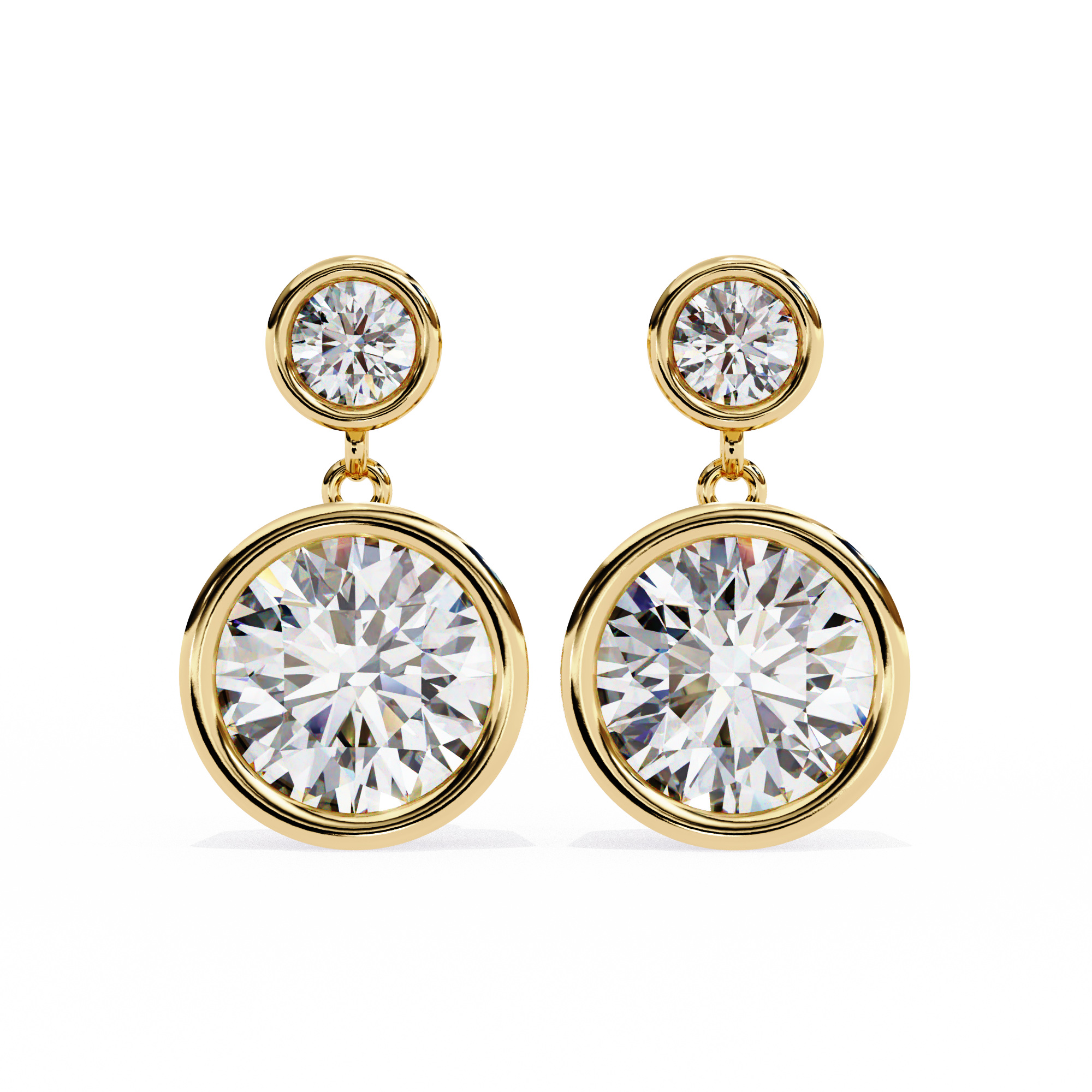
For smaller purchases, such as everyday earrings, certified lab stones still matter. A pair like everyday lab diamond studs with classic settings gives buyers an easier way to balance wearability, sparkle, and verifiable origin without overcomplicating the purchase.
What happens in the real world: a common scenario
Imagine someone brings in a 1.50 carat round brilliant diamond ring bought online. The stone is F color, VS1 clarity, excellent cut, set in 14k white gold with rhodium plating and four prongs.
A local jeweler first tests it with a diamond tester. It reads as diamond. That only confirms it is not CZ.
Next, the jeweler checks the girdle under magnification. Two prongs partially block the view, but after rotating the ring, the inscription appears. The report number matches an IGI lab grown diamond certificate.
Total time: about 12 minutes.
Now imagine the same ring has no visible inscription and no paperwork. The jeweler can screen it, but if the result is “refer” or inconclusive, the stone may need to go to a gemological lab. That could take days, not minutes.
That is the unglamorous truth: most clean answers come from preparation, not mystique.
Red flags when asking a jeweler to identify a lab diamond
Be careful if you hear any of these lines:
- “Lab diamonds look too perfect.”
- “Natural diamonds always have a warmer glow.”
- “This tester proves it is mined.”
- “No certificate is needed if you trust the jeweler.”
- “Lab grown means it will get cloudy later.”
That last one is especially annoying. A true lab grown diamond does not turn cloudy because it is lab grown. Cloudiness can come from poor cut, heavy inclusions, dirt, oil buildup, damaged coatings on simulants, or bad disclosure — not from the diamond’s laboratory origin.
Theicelane is a useful example of the direction the better part of the market is moving: clearer lab-grown categories, visible product choices, and educational content that does not treat lab diamonds like second-class stones. Random sellers often compete only on price; stronger retailers compete on disclosure.
Quick FAQ
Can a pawn shop tell if a diamond is lab grown?
Sometimes, but not always. Many pawn shops can test whether a stone is diamond, but fewer have reliable synthetic diamond screening tools. For a valuable stone, ask whether they use gemological equipment beyond a thermal tester.
Can a jeweler tell if a diamond is lab grown after it is set?
Often, yes, especially if the girdle inscription is visible. But a heavy bezel, hidden halo, or tight prong placement can make inspection harder.
Are lab grown diamonds worth less?
They usually cost less than comparable natural diamonds and often have lower resale value. The upside is that buyers can often afford a larger carat weight, better color, or higher clarity for the same budget.
Conclusion: trust tools, not guesses
So, can a jeweler tell if a diamond is lab grown? Yes — when the jeweler has the right training, equipment, and paperwork. No — if they are relying on eyesight, sparkle, or an old-school diamond tester that only separates diamond from simulants.
The smartest move is simple: buy stones with clear grading reports, verify the inscription when possible, and work with retailers that are comfortable discussing origin openly. If you are still weighing style, budget, and long-term value, Theicelane’s take on why lab-grown diamond rings are gaining serious attention is a sensible next read before choosing your piece.
A beautiful diamond should not come with a guessing game — it should come with proof.