Cart
0
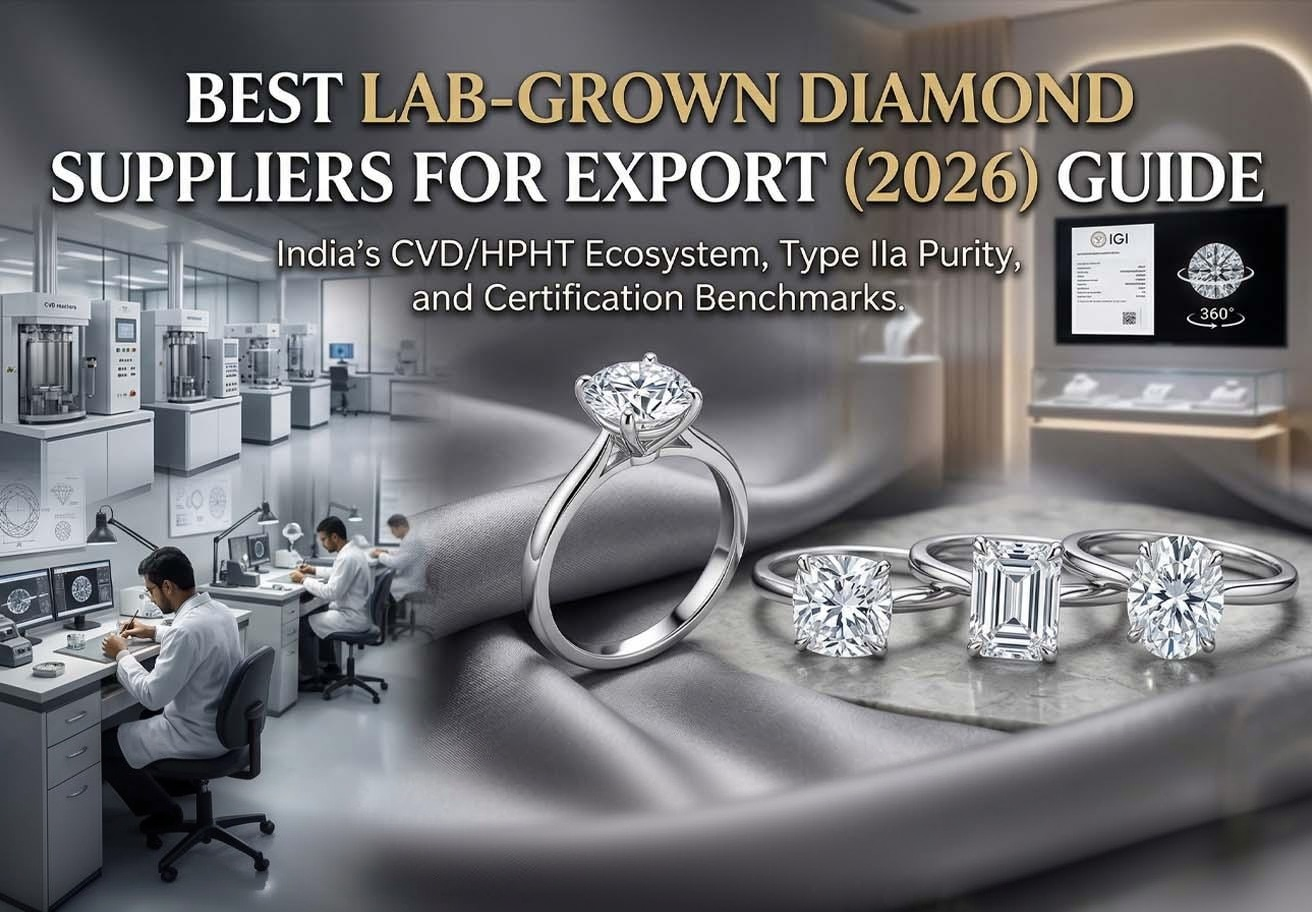
Key Takeaways : Best Lab-Grown Diamond Suppliers for Export (2026) Guide
- India's Manufacturing Dominance: India has evolved from a finishing hub to a production titan, with Surat producing 98% of the country’s lab-grown diamonds (LGDs). This scale is supported by "Sunrise Industry" government backing and R&D grants.
- The Type IIa Gold Standard: Value in 2026 is driven by Type IIa CVD diamonds. These stones represent the top 2% of purity, offering superior "ice-white" scintillation and a lack of chemical impurities or magnetic properties.
- New Regulatory Safety Net: The IS 19469:2025 BIS regulation is now the mandatory benchmark. It ensures uniform disclosure and accurate labeling, providing global buyers with essential legal transparency.
- Significant Cost Savings: Indian LGDs provide a 70–80% price advantage over natural diamonds, enabling a surge in the 2-carat to 5-carat "statement luxury" segment for bridal and fashion jewelry.
- Operational Efficiency: Top-tier suppliers now utilize vertical integration (controlling the process from "seed to setting") and digital transparency, including 360-degree videos and live API-integrated inventories.
- Market Expansion: While the United States remains the largest export destination, there is significant growth in Europe (driven by ethics), the Middle East (statement pieces), and Africa (daily-wear luxury).
- Strategic Sourcing & The Ice Lane: Success for international brands relies on choosing partners who prioritize trust over price.
- The Ice Lane serves as a specialized bridge in this ecosystem, focusing on the elite Type IIa CVD segment to ensure consistent D-E-F color grades.
- Through its Vendor Program, it provides global retailers with factory-direct access and managed supply chains, specifically catering to those seeking "Smart Luxury" and ethical transparency.
In the evolving world of diamonds, value is no longer defined solely by rarity—it is increasingly shaped by precision, technology, and control over creation. Over the past few years, India has quietly transitioned from being the backbone of global diamond finishing to becoming one of the most influential producers of lab-grown diamonds, redefining how the world sources brilliance.
What makes this shift notable is not just scale, but structure. India’s lab-grown diamond ecosystem combines manufacturing depth, technical expertise, and pricing efficiency in a way few markets can replicate. From high-volume calibrated stones to premium-grade Type IIa diamonds engineered for optical purity, the country now caters to a wide spectrum of international demand.
For global buyers—whether retailers, private labels, or bulk importers—the challenge is no longer availability, but selection. Identifying the right supplier, understanding production quality, and aligning sourcing with brand positioning have become critical decisions in a highly competitive landscape.
This guide takes a closer look at India’s lab-grown diamond export ecosystem in 2026—breaking down supplier categories, quality benchmarks, and strategic considerations that matter when sourcing at a global level.
1. Why India Leads in Lab-Grown Diamond Exports
India’s dominance in 2026 is built on structural advantages that few nations can replicate:
- Manufacturing Infrastructure: Hubs like Surat and Mumbai house the world's most concentrated clusters of CVD reactors. In 2026, Surat alone produces over 98% of India's lab-grown diamonds, benefiting from state-of-the-art laboratory environments.
- Legacy Craftsmanship: India processes roughly 9 out of 10 diamonds sold globally. The same master artisans who cut legendary natural stones now apply that precision to LGDs, ensuring superior light performance.
- Government Support: The Indian government's "Sunrise Industry" designation has provided R&D grants and removed duties on diamond seeds, making Indian LGDs the most cost-competitive on the global market.
- Regulatory Milestone (IS 19469:2025): Released in early 2026, this Bureau of Indian Standards (BIS) regulation mandates uniform disclosure. It ensures that any stone exported is legally defined and accurately labeled, providing a "safety net" for international buyers.
2. Types of Lab-Grown Diamond Suppliers in India
Navigating the 2026 landscape requires distinguishing between the different entities operating in the ecosystem:
A. Primary Manufacturers (Producers)
These companies own the CVD or HPHT reactors. They grow the rough diamonds and often have in-house cutting units.
- Best for: High-volume importers seeking factory-direct pricing and large carats (3ct to 10ct+).
B. Wholesalers and Traders
Wholesalers source from multiple manufacturers to maintain a massive, diversified inventory of loose stones.
- Best for: Small to mid-sized retailers who need a variety of marquise or oval shapes and lower minimum order quantities (MOQs).
C. Export-Oriented Jewelry Manufacturers
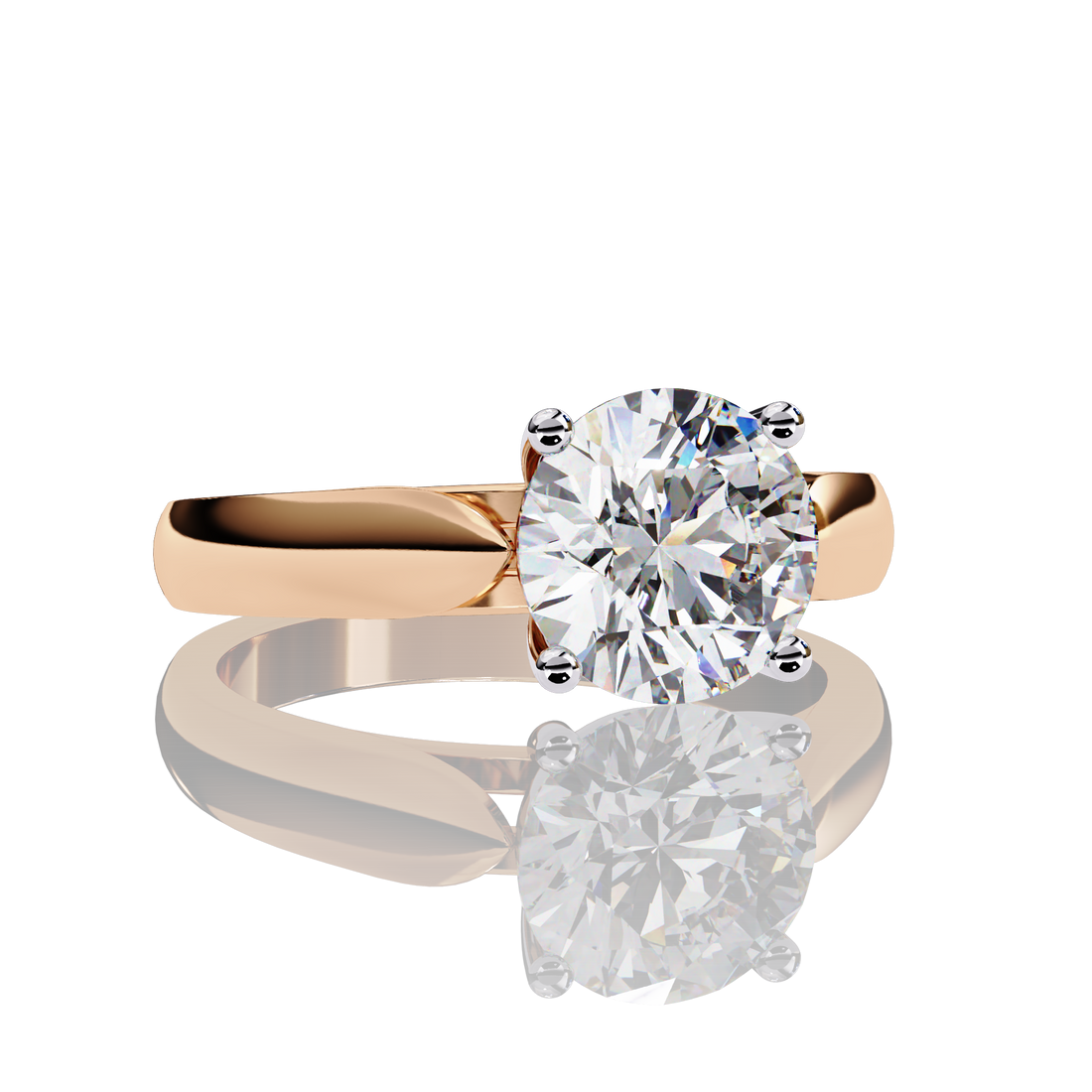
These suppliers provide finished, "retail-ready" jewelry, specializing in 14K/18K gold and platinum settings.
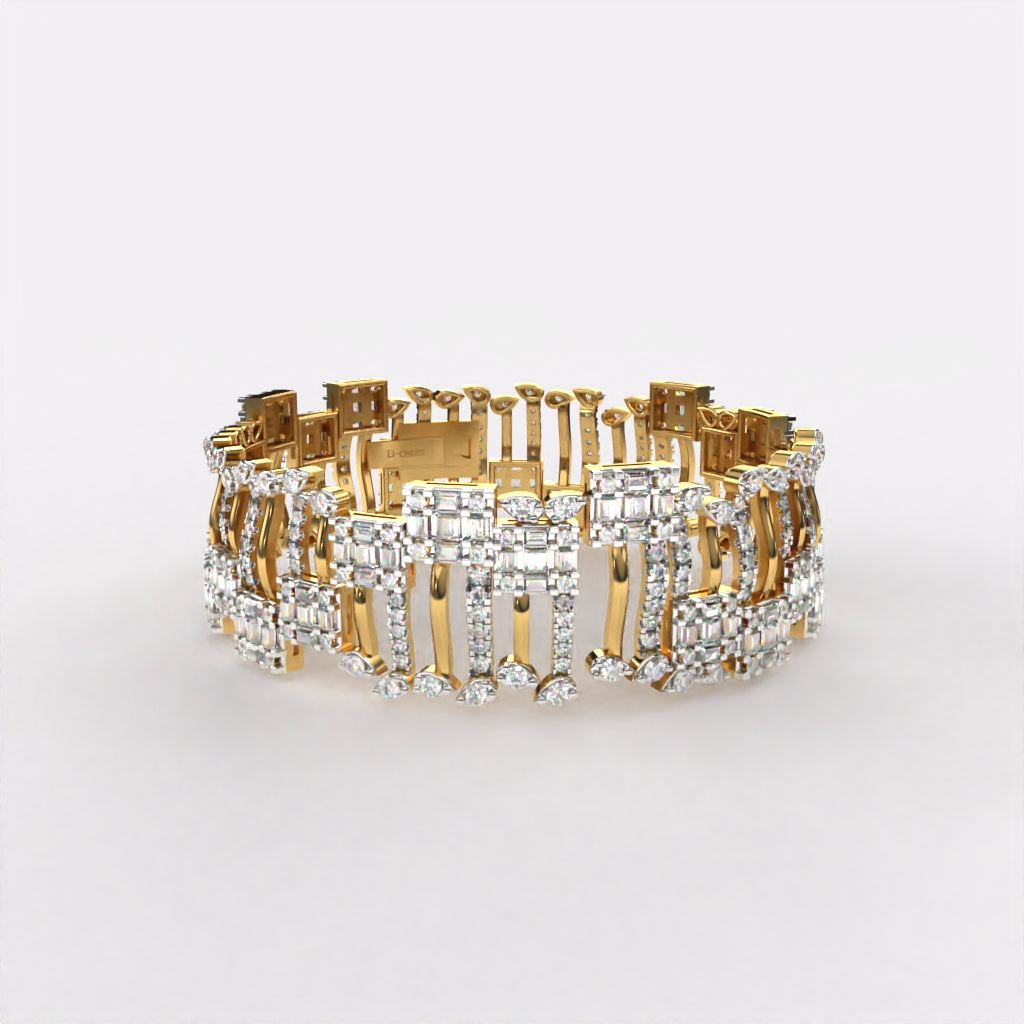
- Best for: Global brands seeking high-quality engagement rings or classic tennis bracelets.
D. Specialized Boutique Manufacturers
This elite tier focuses on "Smart Luxury" over mass volume. They prioritize Type IIa CVD diamonds—the rarest category—and controlled growth environments to ensure consistent D-E-F color grades.
3. What Makes a Supplier “Best” for Export?
Choosing an export partner in 2026 involves more than comparing prices. A top-tier partner must offer:
- IS 19469:2025 Compliance: Every invoice must follow the new BIS disclosure norms, ensuring "laboratory-grown diamond" is clearly stated.
- Reputable Certification: Reliance on IGI or GIA reports is mandatory. In 2026, an IGI certificate is the baseline expectation for satisfying transparency requirements in the US and Europe.
- Vertical Integration: Suppliers who control the journey from "seed to setting" offer 25–30% higher margins to the importer.
- Digital Transparency: High-definition 360-degree videos and live API-integrated inventories are essential for remote sourcing.
4. The Growing Importance of Type IIa Diamonds
In the 2026 export market, Type IIa diamonds have become the gold standard. Representing the top 2% of diamonds globally, these stones are chemically the purest form of carbon.
- Purity: Lacking nitrogen or boron impurities, Type IIa CVD stones offer unmatched scintillation.
- Consumer Preference: Modern buyers specifically seek out Type IIa certified diamonds for their superior transparency and "ice-white" look.
- Specialization: Brands like The Ice Lane emphasize these premium stones, as they are non-magnetic and free from the "blue nuancing" sometimes found in HPHT alternatives.
5. Key Export Markets for Indian Lab-Grown Diamonds
India’s LGD exports are strategically flowing into four major regions in 2026:
- United States: The world’s largest market, driven by a 70-80% cost-saving over natural stones for bridal jewelry.
- Europe: A market defined by a focus on sustainability and ethical transparency, where IGI-certified Indian stones are highly valued.
- Middle East (UAE): Growing demand for "Statement Luxury," with a surge in high-carat solitaire necklaces.
- Africa: Emerging markets seeking affordable daily-wear luxury for a rising middle class.
6. Expert Insight: A Word from Hema Khatwani
"The 2026 export landscape is no longer about competing on price; it's about competing on trust," says Hema Khatwani, Founder of The Ice Lane. "With the new BIS standards and the global shift toward Type IIa CVD stones, our role is to act as a bridge between Surat’s technical power and the global consumer’s desire for 'Smart Luxury'. Whether it’s a delicate gold pendant or a 5-carat exhibition piece, transparency is our most valuable asset."
7. Trends Shaping the 2026 Industry
- Sustainable Luxury: Consumers are prioritizing environmentally friendly and ethically sourced products, favoring LGDs over mined stones.
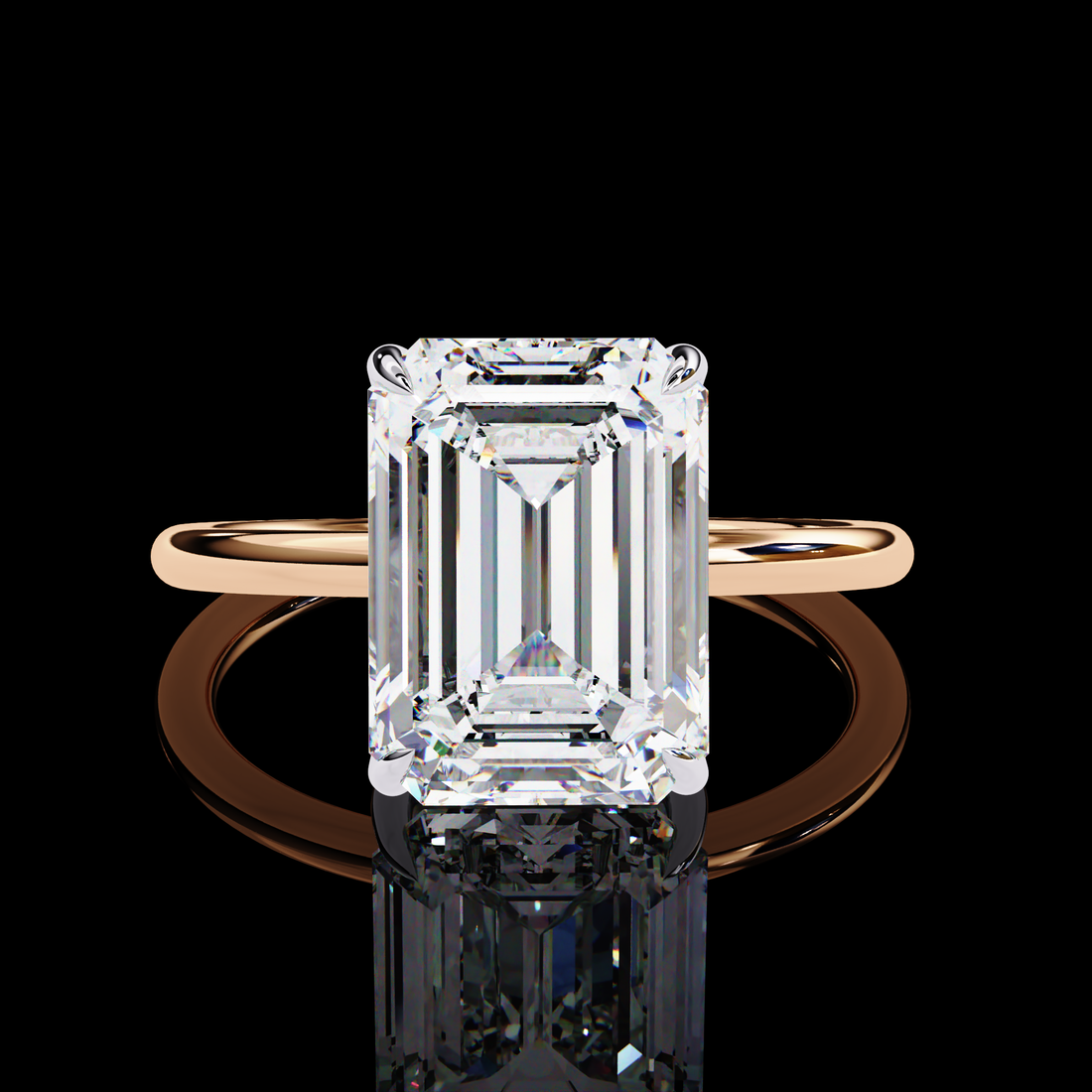
- Larger Carat Sizes: Lab-grown tech makes 2-carat to 5-carat segments highly accessible, leading to a rise in statement solitaire rings.
- Bespoke Customization: Buyers seek unique designs, leading to growth in custom jewelry manufacturing.
- Digital Transformation: Virtual catalogs and AI-driven sourcing are simplifying the global reach for Indian manufacturers.
8. Sourcing Checklist for Global Buyers
- Define Requirements: Determine your budget, volume, and quality (CVD vs. HPHT).
- Verify Standards: Ensure compliance with BIS IS 19469:2025 for documentation.
- Check Certificates: Look for verified IGI or GIA reports.
- Request Samples: Evaluate the "fire" and scintillation before committing to bulk orders.
- Test Buybacks: Understand the supplier's buyback and exchange policies to build long-term trust.
The Role of Specialized Manufacturers
Some manufacturers distinguish themselves through focused production strategies. For instance, companies like The Ice Lane emphasize controlled manufacturing environments and consistent quality output, particularly in the Type IIa segment.
Such specialization can be beneficial for:
- Premium jewelry brands
- Exporters targeting high-end markets
- Businesses seeking consistent grading standards
9. Future Outlook (2026–2030)
The Indian LGD industry is in a mature phase with a stable price floor. By 2030, India is projected to account for nearly 30% of global diamond jewelry consumption. Continued investment in CVD technology and the expansion of retail footprints into Tier-2 cities will cement India's role as the global leader in both manufacturing and consumer demand.
Summary Table: The 2026 Export Edge
|
Factor |
Indian LGD Export Advantage |
|
Manufacturing Hub |
Surat (98% of domestic production) |
|
Growth Tech |
CVD-focused (Type IIa purity) |
|
Regulatory Body |
BIS (IS 19469:2025 Standards) |
|
Cost Savings |
70–80% lower than natural equivalents |
|
Major Markets |
USA, Europe, UAE, Africa |
Conclusion: Sourcing for the Future
India has successfully redefined itself as the world's LGD factory. By choosing a partner that understands the technical nuances of Type IIa growth and the legal requirements of IS 19469:2025, international businesses can secure their position in the $1.8 billion LGD revolution.
Are you looking to scale your diamond inventory?
Connect with The Ice Lane’s Vendor Program to access factory-direct Type IIa CVD diamonds for your global retail needs.
India’s Global LGD Advantage
What separates India’s lab-grown diamond supply from global producers?
India’s advantage lies in its tightly integrated ecosystem—where large-scale CVD production, legacy craftsmanship, and government-backed incentives operate together. This creates a balance of precision, volume, and pricing that is difficult for other countries to replicate.
Why are Type IIa CVD diamonds the benchmark for premium exports?
Type IIa diamonds are valued for their near-perfect chemical purity and superior light performance. In 2026, they have become the preferred choice for international brands aiming to position their products in the high-end “clean luxury” segment.
How does the BIS IS 19469:2025 regulation impact international sourcing?
This regulation standardizes how lab-grown diamonds are disclosed and labeled, reducing ambiguity in global trade. For buyers, it acts as a compliance layer that ensures clarity, legal security, and consistent documentation across all shipments.
Why are larger stones (2–5 carats) dominating export demand?
With a significant cost advantage over natural diamonds, buyers can now access larger stones without exponential price increases. This has shifted demand toward bold, statement-driven jewelry in bridal and luxury fashion categories.
How does The Ice Lane support global buyers in sourcing?
The Ice Lane focuses on the Type IIa CVD segment, offering controlled manufacturing standards and consistent D–E–F color grading. Through its Vendor Program, it provides factory-direct access and a managed supply chain prioritizing quality and long-term reliability.