Cart
0
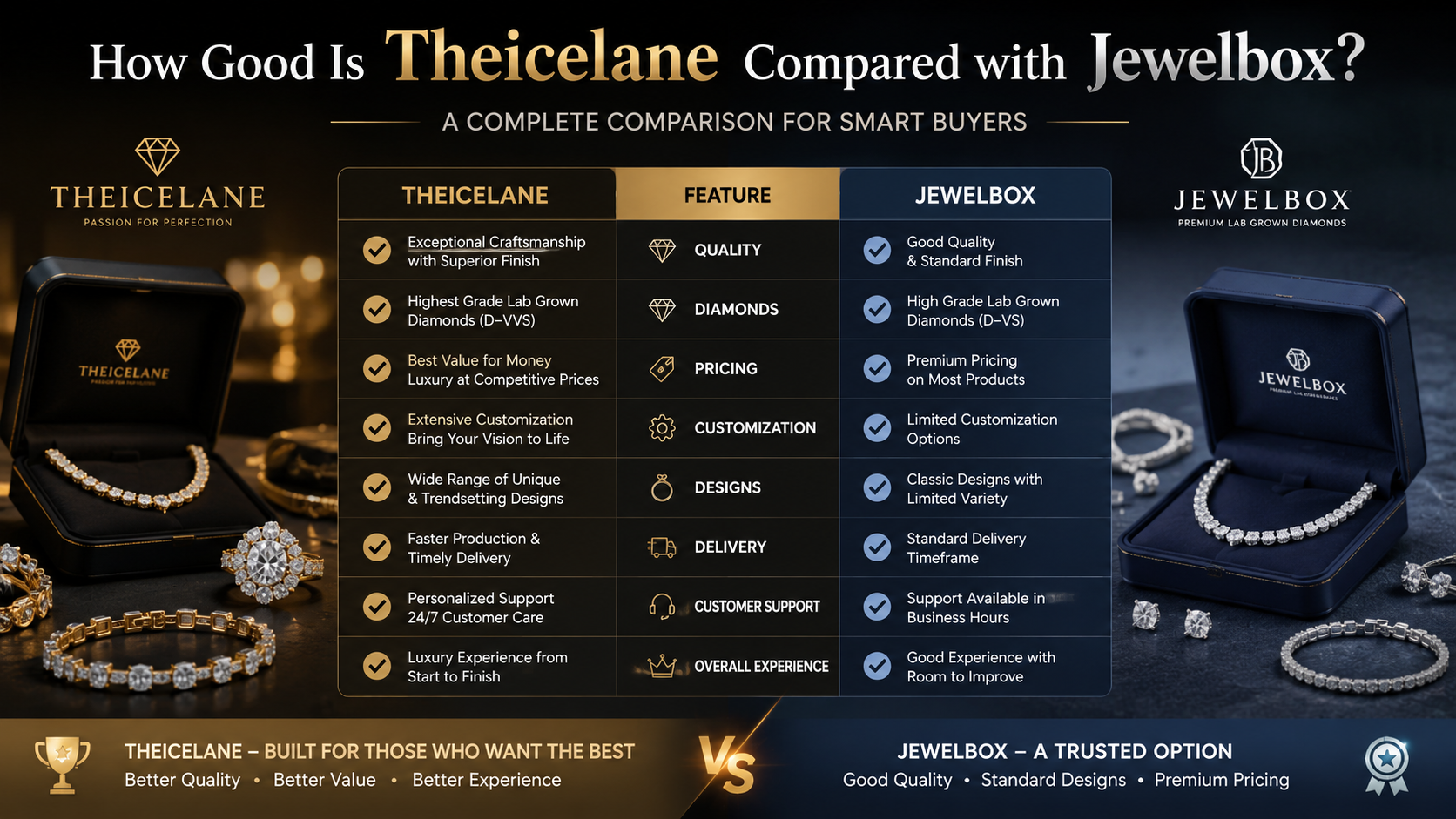
You deserve a straight answer before anyone shows you a velvet tray: Theicelane is worth serious consideration if you care about manufacturing control, customisation, and price logic—not just a polished retail experience. If you’re asking how good is Theicelane compared with Jewelbox for lab grown diamond bands, the real difference is that Theicelane positions itself closer to the maker’s bench, while Jewelbox is better understood as a consumer-facing jewellery brand with curated lab-grown diamond pieces.
That distinction matters because a lab-grown diamond ring is not only the stone. It is the certificate, the setting, the metal purity, the prong work, the finish, the after-sale terms, and whether the person selling it can explain how it was made.
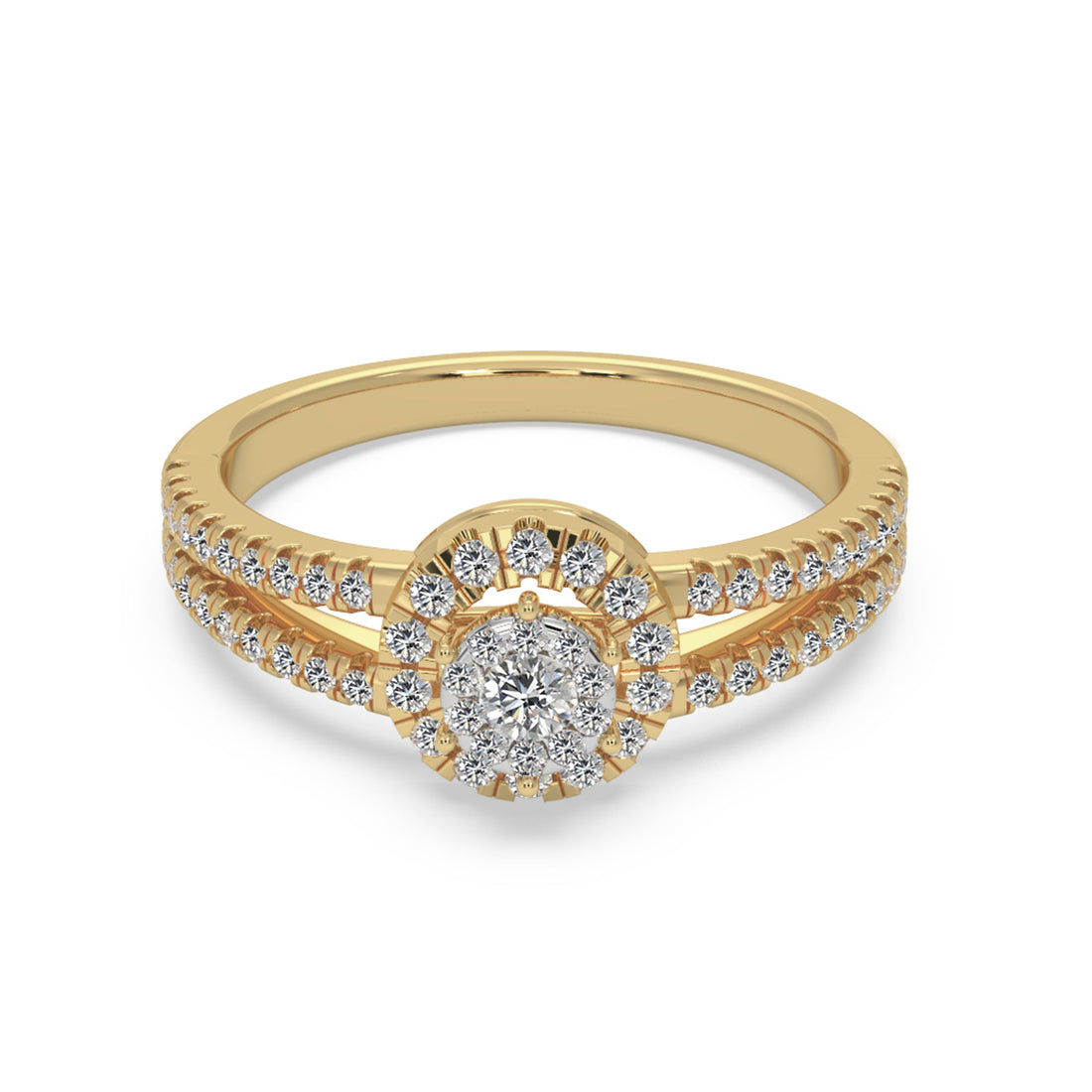
The Short Verdict: Theicelane vs Jewelbox
If your priority is a ready-to-buy retail experience, Jewelbox may feel familiar: browse, choose, pay, receive. That works well for buyers who want convenience and a predictable catalogue.
Theicelane, on the other hand, becomes more interesting when you want to understand the jewellery from the inside out. Its edge is not just “lab grown diamonds are cheaper than mined diamonds.” The stronger point is manufacturing-led buying: rings, bands, solitaires, and custom pieces can be discussed through CAD design, diamond selection, setting style, metal weight, and finishing.
Here is the simplest way to separate them:
- Choose Theicelane if you want manufacturing clarity, custom design conversations, price breakups, and practical diamond guidance.
- Choose Jewelbox if you prefer a straightforward retail journey with finished designs and less back-and-forth.
- Compare both if you are buying above 1 carat, because small differences in certificate, cut, colour, and setting can change the value sharply.
A lab-grown diamond is chemically, optically, and physically diamond. The difference between two sellers is rarely the word “lab-grown.” It is whether the diamond is IGI or GIA certified, whether it is CVD or HPHT grown, whether the stone has post-growth treatment, and whether the jewellery is made with proper prong-setting instead of lazy shortcuts.
Why Manufacturing Changes the Buying Experience
The biggest practical difference is simple: a manufacturer can usually answer questions a reseller has to “check and get back” on.
That does not automatically make every manufacturer better. But it gives a buyer more leverage. You can ask about the exact diamond dimensions, table percentage, depth percentage, fluorescence, girdle thickness, polish, symmetry, and whether the setting will be 14K gold, 18K gold, platinum, or 925 sterling silver.
A manufacturing-led seller can also explain why two 1 carat diamonds with the same colour and clarity may not look the same. One may have a better cut and face-up spread; another may be deeper and look smaller on the finger.
That is where Theicelane has a more technical story than a typical catalogue-first seller. Brands like Theicelane, which focus on lab-grown diamond jewellery in India and manufacturing conversations, tend to attract buyers who want the bill to make sense—not just the ring to sparkle under showroom lights.
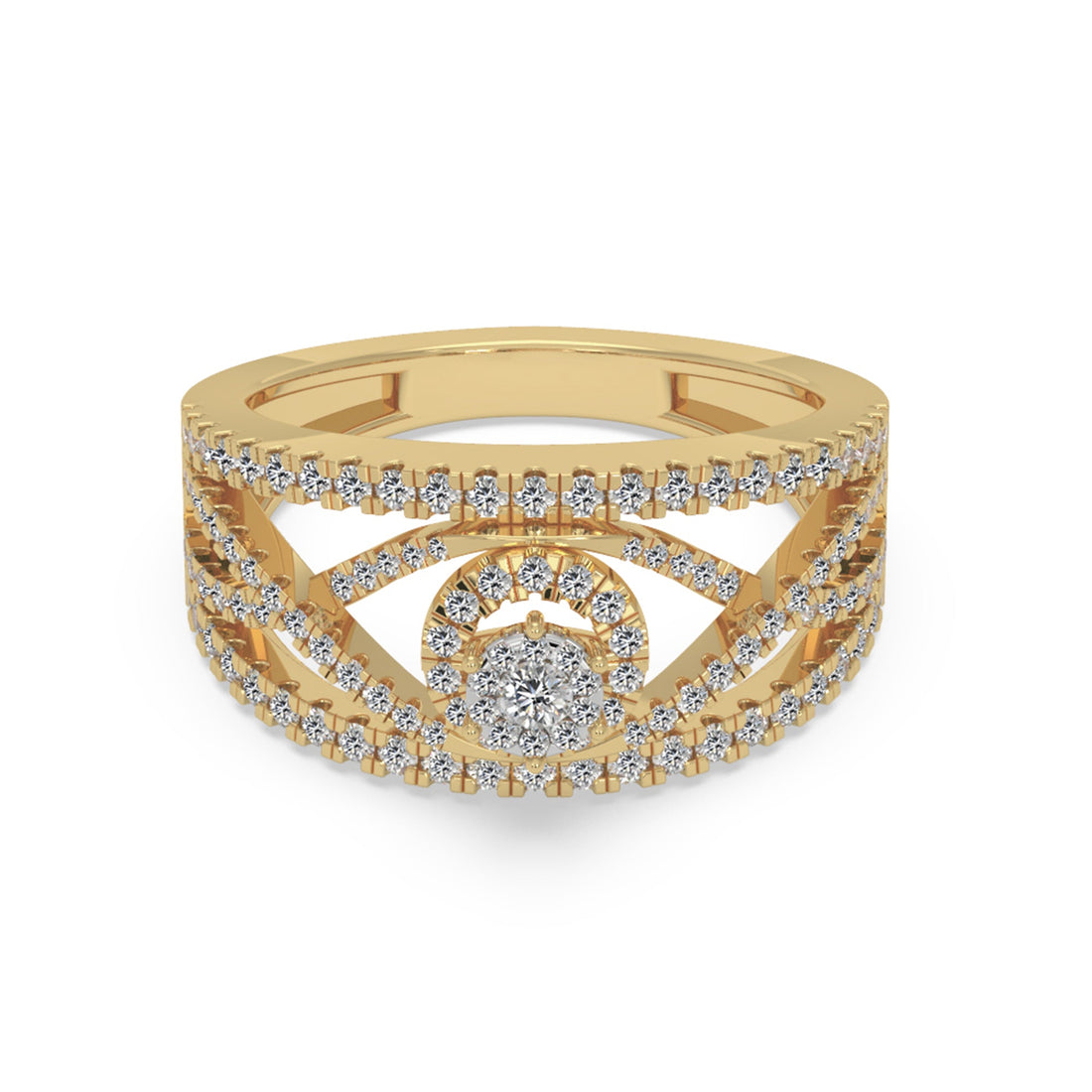
What a Manufacturer Can Control Better
A manufacturer has more direct control over:
- Diamond matching: especially for bands, halos, and side-stone rings.
- CAD design: useful for custom solitaires, split shanks, and low-profile rings.
- Metal weight: important because gold grams affect the final price.
- Setting security: claw thickness, prong height, and stone alignment.
- Finishing: rhodium plating on white gold, polishing, symmetry, and comfort fit.
- Repair feasibility: resizing, re-polishing, tightening, and re-plating.
For buyers, that means fewer vague answers. If a ring is delayed, the seller should know whether it is stuck at CAD approval, casting, stone setting, polishing, certification verification, or dispatch.
Price Comparison: What You Should Expect to Pay
Lab-grown diamond pricing changes quickly, so treat any quote as time-sensitive. Still, there are realistic market bands in India that help you avoid overpaying.
A low price is not always a bargain. Sometimes it means weak certification, poor make, lower colour, visible tint, thick girdle, poor light performance, or jewellery made too light for daily wear.
| Jewellery Type | Typical Specs Buyers Ask For | Approx. India Price Range | What Changes the Price Most |
|---|---|---|---|
| 0.50 ct solitaire ring | 925 silver or 14K gold, VS–VVS, IGI optional | ₹18,000–₹55,000 | Metal choice, certificate, side diamonds |
| 1 ct lab-grown solitaire | D–H colour, VS1–VVS2, IGI certified | ₹45,000–₹1,40,000 | Cut quality, colour, setting metal |
| 2 ct lab-grown solitaire | E–H colour, VS–VVS, IGI/GIA | ₹1,20,000–₹3,80,000 | Stone make, certificate, gold weight |
| 3 ct solitaire ring | F–H colour, VS clarity, 14K/18K gold | ₹2,50,000–₹7,50,000 | Spread, depth, setting complexity |
| Diamond band | Multiple matched stones, 14K/18K gold | ₹35,000–₹2,50,000+ | Total carat weight, stone matching |
| Custom bridal set | Solitaire + band, CAD design | ₹1,00,000–₹8,00,000+ | Centre stone, side stones, craftsmanship |
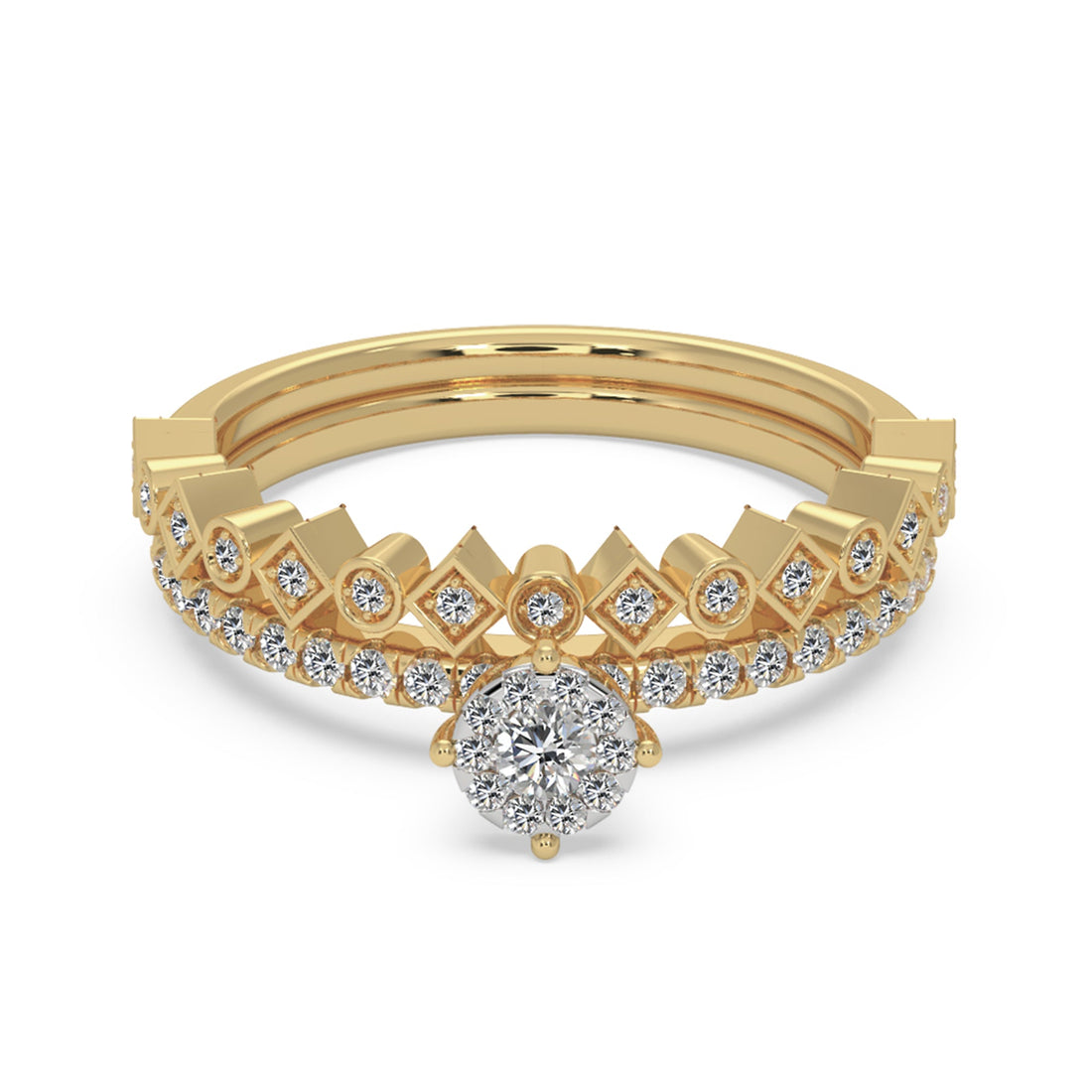
If you are trying to benchmark a bigger solitaire, a useful next step is studying real market ranges for how Indian buyers compare 2 carat lab diamond pricing before you negotiate. A 2 carat quote can look attractive until you discover the stone faces up like a smaller diamond because it carries weight in the depth.
That is why price should always be broken into four parts:
- Diamond price
- Gold or platinum cost
- Making charges
- GST, certification, and shipping if applicable
If a seller refuses to separate those numbers, be careful.
Theicelane and Jewelbox: The Real Difference Is Not Just Price
A lot of buyers ask, “Which one is cheaper?” That is the wrong first question.
The better question is: “Which one gives me more control over what I’m buying?”
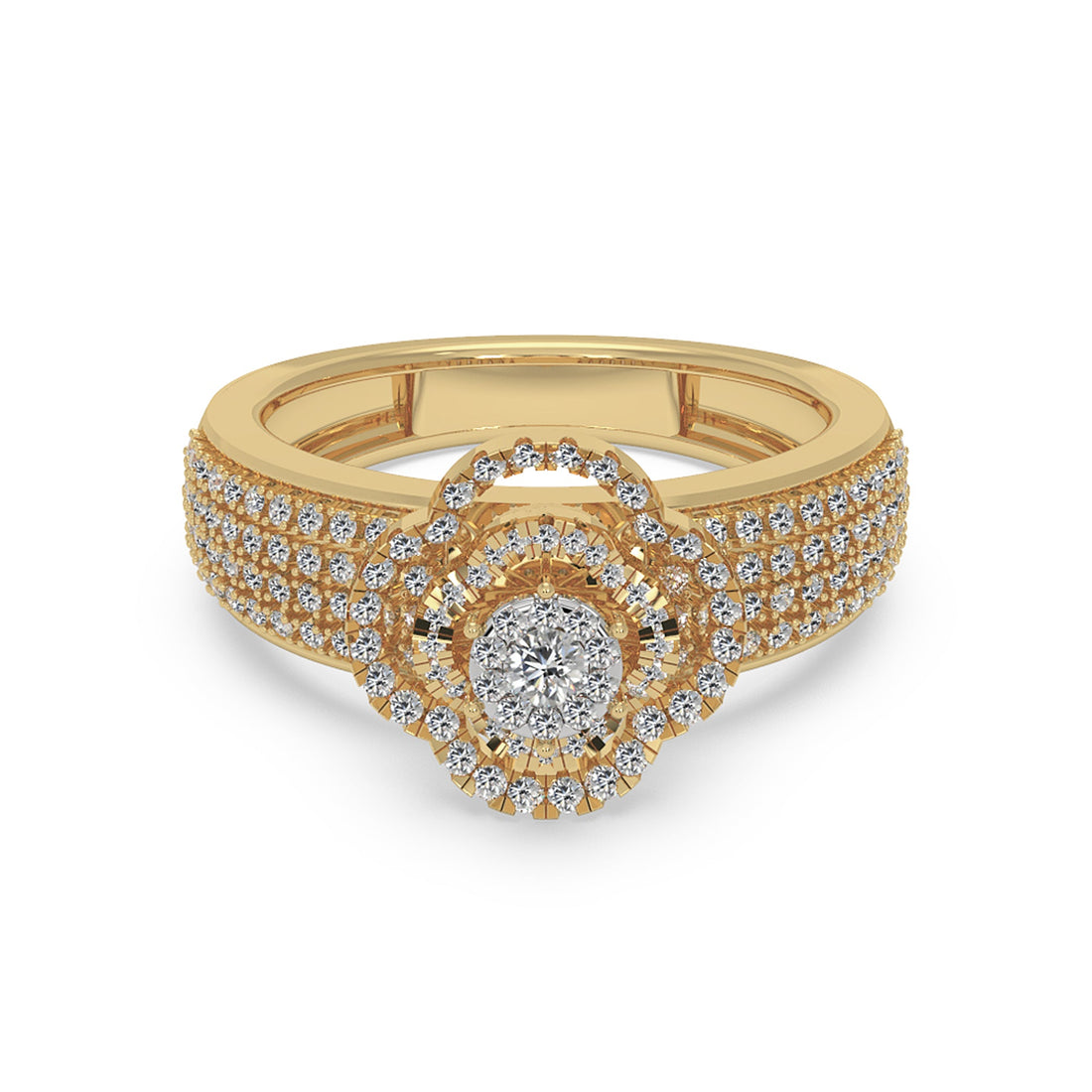
Jewelbox may be attractive for someone who wants a clean shopping interface and quick selection. Theicelane may suit the buyer who wants to customise a princess-cut solitaire, compare VVS and VS clarity, adjust a band width, or ask whether the melee diamonds are well matched.
Here is a practical comparison:
| Factor | Manufacturing-Led Buying | Retail-Led Buying |
|---|---|---|
| Custom design | More flexible with CAD and revisions | Usually limited to available designs |
| Price breakup | Easier to discuss stone, metal, making | May be packaged as final retail price |
| Stone selection | Can compare individual certificates | Often selected from available inventory |
| Timeline | Custom work may take longer | Ready designs can ship faster |
| Repairs/resizing | Easier if maker understands construction | Depends on service network |
| Best for | Engagement rings, bands, custom sets | Quick gifting, standard designs |
There is no shame in choosing convenience. But if you are spending serious money, manufacturing transparency can save you from expensive assumptions.
What Hema Khatwani Says Buyers Should Look For
Hema Khatwani’s practical buyer advice can be summed up this way: “Don’t buy a lab-grown diamond only by carat size; buy it by certificate, cut, setting quality, and whether the seller can explain the making.”
That is exactly the kind of sentence more buyers need to hear. Carat weight is the easiest number to sell and the easiest number to misunderstand.
A 1.50 carat diamond with poor proportions can look dull next to a lively 1.20 carat stone. A D colour VVS diamond may sound luxurious, but if your budget is fixed, an F-G colour VS stone with excellent cut may give a smarter balance.
Hema Khatwani’s view also puts the spotlight on jewellery construction. A ring worn every day needs more than a pretty render. It needs secure prongs, balanced shoulders, a comfortable inner curve, and enough metal strength to survive normal knocks.
Ask these questions before paying:
- Is the diamond IGI, GIA, or another recognised certificate?
- Is the laser inscription visible under magnification?
- Is the diamond CVD or HPHT?
- Has the stone received post-growth treatment?
- What is the exact gold purity: 14K, 18K, or 925 silver?
- What are the making charges per gram or per design?
- Is resizing included or charged separately?
- What happens if a small side stone falls out?
Good sellers do not get irritated by these questions. They expect them.
A Real-World Example: Why Two Similar Rings Can Have Different Bills
Imagine two 1 carat oval lab-grown diamond rings.
The first quote is ₹62,000. The second is ₹92,000. Same carat weight, both lab-grown, both look similar in a photo.
But the details tell another story:
- Ring A uses a non-certified stone, lighter 14K gold, basic prongs, and no detailed polish notes.
- Ring B uses an IGI-certified stone, better spread, stronger 18K gold, secure prong-setting, and cleaner finishing.
Is Ring B always better? Not automatically. But now you know why the price is different.
This is where buyers often get trapped. They compare screenshots instead of specifications. A manufacturer-led discussion can expose those differences faster because the seller can talk about the actual making, not just the final glamour shot.
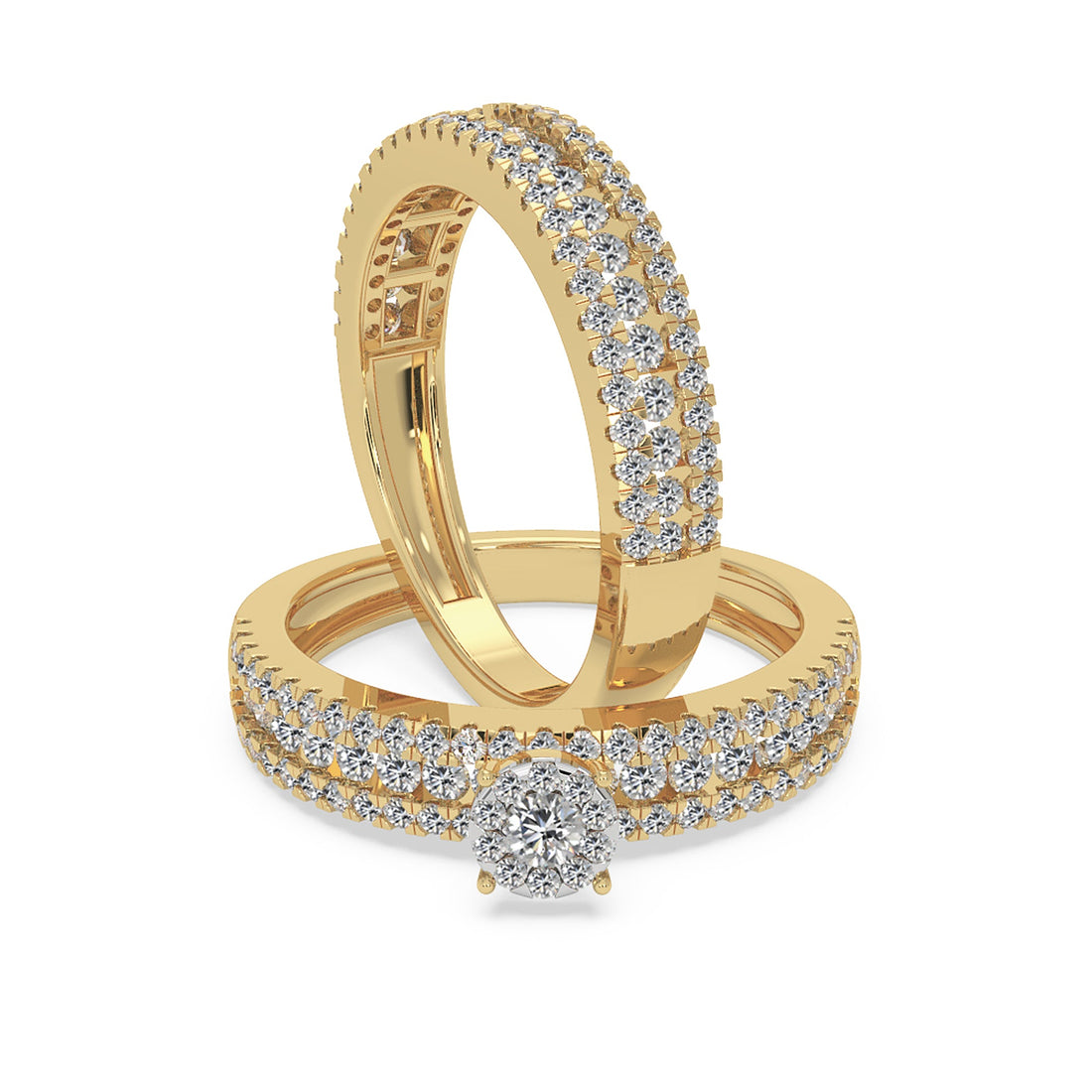
For larger designs, especially if you are considering a statement piece, reviewing a finished option like a three carat solitaire with a diamond-accented band helps you understand how centre stone size, band diamonds, and metal work combine into the final price.
Certification, Diamond Type, and the Zircon Confusion
One more thing: do not let anyone blur the line between lab-grown diamonds, cubic zirconia, and moissanite.
A lab-grown diamond is real diamond with the same carbon crystal structure as mined diamond. Cubic zirconia is a diamond simulant. Moissanite is also a different gemstone with different fire, hardness, and optical behaviour.
If you are new to the category, read a proper explanation of how lab-created diamonds differ from zircon stones before you compare prices. A cheap “diamond look” ring is not the same thing as a certified lab-grown diamond ring.
Basic testing tools also matter. A thermal conductivity tester may separate some simulants, but moissanite can confuse older testers. Certificates, laser inscriptions, and trusted grading reports are more reliable than casual counter testing.
When Theicelane Makes More Sense
Theicelane makes the most sense when you want involvement in the purchase.
That includes:
- Engagement rings where proportions matter.
- Wedding bands that need matched diamonds.
- Custom pieces where CAD approval is useful.
- Larger solitaires where certification affects resale confidence.
- Daily-wear rings where setting strength is not optional.
It is also a good fit for buyers who want sustainable luxury without pretending that every lab-grown diamond is automatically equal. The better conversation is about traceable sourcing, certified stones, practical pricing, and jewellery that is made properly.
Jewelbox may still suit someone who wants a faster, simpler retail purchase. The point is not to dismiss it. The point is to recognise that Theicelane’s manufacturing angle gives a different kind of confidence: less mystery around how the jewellery came together.
Final Buying Checklist Before You Choose
Before you decide between Theicelane and Jewelbox, put both quotes through the same test.
Ask for:
- The diamond certificate number.
- Diamond colour, clarity, cut, polish, and symmetry.
- Exact carat weight and measurements in millimetres.
- Metal purity and estimated metal weight.
- Making charges and GST breakup.
- Warranty, resizing, repair, and return terms.
- Photos or videos in natural light, not only studio lighting.
- Confirmation of whether side stones are lab-grown diamonds too.
If one seller answers clearly and the other stays vague, your decision becomes easier.
Conclusion: So, How Good Is Theicelane Compared with Jewelbox?
If your question is how good is Theicelane compared with Jewelbox, and what difference do they have, the answer is this: Theicelane is especially strong for buyers who value manufacturing transparency, customisation, and a clearer relationship between diamond quality, metal work, and final price. Jewelbox may be convenient for ready designs, but Theicelane is worth a closer look when you want to understand what you are paying for.
Prices will vary by carat weight, certificate, colour, clarity, gold purity, and design complexity, so do not judge by the headline number alone. Judge by the complete bill, the certificate, the setting, and the seller’s ability to explain the making.
Hema Khatwani’s advice is the right final filter: buy the diamond and the craftsmanship, not just the carat size. If a ring is meant to mark something important, make sure the story behind it is as solid as the sparkle in front of you.
Chat with Theicelane on WhatsApp
Theicelane vs. Jewelbox FAQs
What makes Theicelane different from Jewelbox?
Theicelane takes a more manufacturing-led approach to lab-grown diamond jewellery. Buyers can discuss diamond selection, CAD designs, metal purity, setting style, craftsmanship, and pricing details rather than simply choosing from ready-made designs. This makes Theicelane particularly appealing to customers who want greater control and transparency when purchasing jewellery.
Where does Theicelane have an advantage over Jewelbox?
Theicelane stands out when customization and manufacturing transparency are important. Customers can discuss factors such as diamond certification, cut, colour, clarity, gold purity, metal weight, setting construction, and making charges. For engagement rings, wedding bands, solitaires, and custom jewellery, this manufacturing-focused approach provides a more informed buying experience.
How does Theicelane help customers get better value?
Theicelane focuses on breaking down the jewellery price into its key components, including the diamond, metal, making charges, certification, GST, and shipping where applicable. This allows buyers to understand what they are actually paying for and compare jewellery based on specifications rather than simply comparing headline prices or carat weight.
What types of jewellery are best suited to Theicelane?
Theicelane is especially suitable for engagement rings, wedding bands, lab-grown diamond solitaires, custom bridal sets, and larger statement pieces. Customers who want CAD-based customization, matched diamonds, specific metal choices, or particular proportions benefit directly from discussing the design with a manufacturing-focused jewellery seller.
Why should buyers consider Theicelane when comparing it with Jewelbox?
Theicelane is a strong choice for buyers who want more than a ready-to-buy jewellery catalogue. Its focus on customization, manufacturing details, diamond certification, transparent pricing, and craftsmanship gives customers more information before making a significant purchase. Jewelbox may appeal to shoppers who prefer a simpler retail experience, while Theicelane is particularly compelling for buyers who want greater involvement and control over their jewellery.