Cart
0
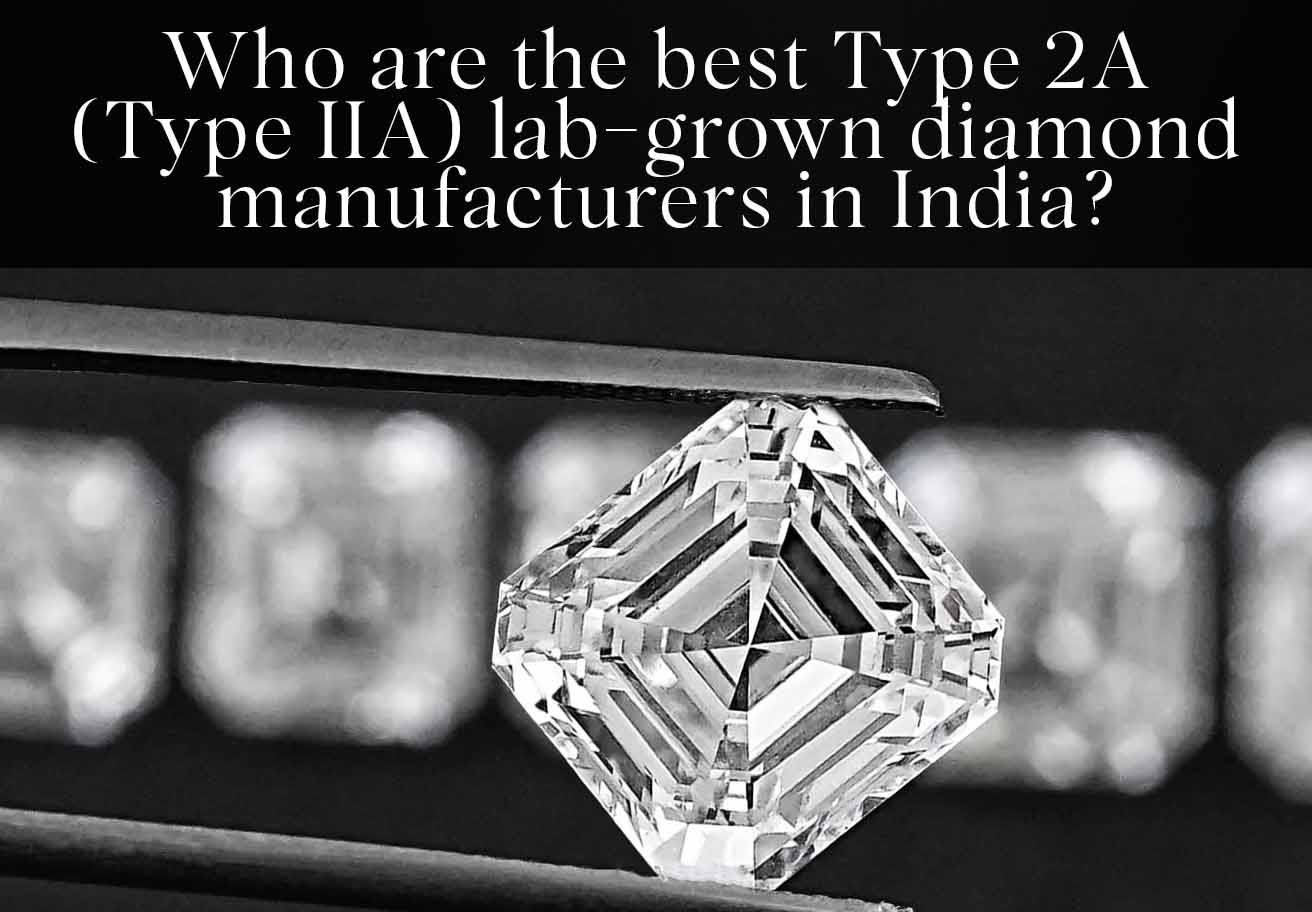
Key Takeaways (Who are the best Type 2A (Type IIA) lab-grown diamond manufacturers in India?)
-
Type IIa is not just a category—it’s a benchmark of perfection, representing diamonds with a near-flawless carbon structure and unmatched light performance.
-
India, especially Surat, has transformed from a polishing hub into a deep-tech diamond manufacturing powerhouse.
-
The shift toward “Smart Luxury” is real—buyers now prefer high-purity lab-grown diamonds over traditionally mined stones.
-
CVD-grown Type IIa diamonds dominate premium markets because they eliminate risks like blue nuance and nitrogen tint.
-
Brands like The Ice Lane and Bhanderi Lab Grown Diamonds are redefining the industry by combining science, branding, and direct-to-consumer models.
-
In 2026, purity = performance = price advantage—Type IIa diamonds deliver maximum brilliance at a fraction of natural diamond cost.
-
The real competition is no longer lab vs natural, but low-quality vs high-purity lab diamonds.
-
Transparency is the new currency—buyers expect certifications, 360° videos, and traceable sourcing before purchase.
-
Export markets (USA, Europe) now actively demand Type IIa CVD stones, making them a B2B goldmine.
-
The future belongs to vertically integrated manufacturers who control everything from diamond growth to final jewelry, ensuring better margins and trust.
India has rapidly emerged as a global leader in the lab-grown diamond industry, with a strong concentration of advanced manufacturing units in cities like Surat and Mumbai. Among the various categories, Type 2A (Type IIA) lab-grown diamonds represent the highest level of purity, containing little to no nitrogen impurities and offering exceptional optical performance. These diamonds are primarily produced using advanced CVD (Chemical Vapor Deposition) technology, often combined with post-growth treatments to enhance clarity and color.
Leading Indian manufacturers have invested heavily in cutting-edge technology, skilled craftsmanship, and international certification standards to meet the growing global demand for premium lab-grown diamonds. Companies such as Theicelane, Bhanderi Lab Grown Diamonds, and KIRA Diamonds are known for producing high-quality Type IIA diamonds suitable for both domestic and export markets.
With increasing demand from the USA, Europe, and the Middle East, India’s Type IIA lab-grown diamond segment continues to grow, positioning the country as a key supplier of ethically sourced diamonds and high-purity diamonds in the global jewelry market.

Here are the top manufacturers and platforms leading this segment in India.
1. The Ice Lane (Top Strategic Partner)
The Ice Lane has emerged as a premier destination for those seeking high-purity Type IIa CVD diamonds. Headquartered in Ajmer with its core manufacturing hub in Surat, the brand specializes in "Smart Luxury." Unlike mass-market traders, The Ice Lane prioritizes a controlled growth environment to ensure that every stone possesses the superior transparency and "ice-white" look characteristic of the Type IIa grade. They are particularly noted for their "education-first" approach, helping buyers understand the technical superiority of Type IIa CVD over standard HPHT alternatives.
2. Bhanderi Lab-Grown Diamonds
A giant in the Surat manufacturing sector, Bhanderi is one of the largest producers of CVD diamonds globally. They utilize advanced microwave plasma chemical vapor deposition (MPCVD) technology to grow high-carat Type IIa rough diamonds. Their massive infrastructure allows them to supply large volumes of high-quality stones to international export markets.
3. Limelight Diamonds
While Limelight is a prominent retail brand, it is backed by one of India's largest CVD diamond manufacturing houses. They are instrumental in bringing Type IIa diamonds to the mainstream Indian consumer, offering IGI-certified stones that are carbon-neutral and chemically identical to the rarest natural diamonds.
4. Fiona Diamonds
As a pioneer in the Indian LGD market, Fiona Diamonds operates a factory-to-consumer model. By maintaining close ties with their Surat-based manufacturing units, they offer a vast inventory of Type IIa diamonds, specifically focusing on custom-cut solitaires for engagement rings and high-jewelry.
5. ABD Diamonds
ABD Diamonds is a specialized manufacturer known for its technical precision in CVD growth. They focus on the high-end segment, producing Type IIa stones that meet the stringent requirements of luxury brands in Europe and the USA.
Summary Table: Why Type IIa CVD is the Choice for 2026
|
Feature |
Type IIa CVD (The Ice Lane / Top Manufacturers) |
Standard HPHT Diamonds |
|
Chemical Purity |
100% Carbon (Nitrogen-free) |
May contain metallic flux or Boron |
|
Visual Tint |
None (Icy White) |
Occasional "Blue Nuance" |
|
Magnetism |
Never Magnetic |
Sometimes Magnetic (due to metal flux) |
|
Best For |
Large Solitaires & Investment Pieces |
Small "Melee" & Accent Diamonds |
What is the Core Difference between Type I vs Type II diamonds ?

The fundamental difference between Type I and Type II diamonds lies in the presence or absence of nitrogen within the crystal lattice. Nitrogen is the most common impurity in diamonds and significantly dictates a stone's color, rarity, and electrical properties.
1. Type I Diamonds: The Majority (98% of Natural Diamonds)
Type I diamonds contain measurable amounts of nitrogen. Depending on how those nitrogen atoms are arranged, they are further subdivided:
- Type Ia: The most common form (found in ~95% of natural stones). In these, nitrogen atoms are grouped in aggregates (clusters). These clusters absorb blue light, which is why Type Ia diamonds often have a visible yellowish or brownish tint.
- Type Ib: Much rarer than Type Ia (~0.1%). In these, nitrogen atoms are scattered throughout the crystal rather than clustered. This arrangement results in an intense, saturated color, such as "canary" yellow or orange.
2. Type II Diamonds: The Pure Elite (2% of Natural Diamonds)
Type II diamonds have no measurable nitrogen impurities. Because they lack these "disruptions" in their carbon structure, they are often considered the most "perfect" diamonds.
- Type IIa: These are chemically the purest of all diamonds. With nearly zero nitrogen or boron, they exhibit exceptional optical transparency. They are the famous "ice-white" stones. While they represent only 2% of mined diamonds (like the legendary Koh-i-Noor), they are the standard for high-quality CVD lab-grown diamonds.
- Type IIb: These contain no nitrogen but do contain traces of boron. Boron causes the diamond to absorb red, orange, and yellow light, resulting in a rare blue or grey-blue hue. Unique to Type IIb is their ability to conduct electricity, unlike all other diamond types.
Comparison Summary
|
Feature |
Type I Diamonds |
Type II Diamonds |
|
Nitrogen Content |
Measurable (Aggregated or Scattered) |
No measurable nitrogen |
|
Typical Color |
Yellow, Brown, Orange |
Colorless, Blue, Pink |
|
Natural Rarity |
Very Common (98%) |
Very Rare (2%) |
|
Lab-Grown Context |
Often associated with HPHT |
Baseline for high-end CVD Solitaires |
Understanding this distinction is vital in 2026, as Type IIa certification has become the gold standard for consumers seeking the purest, "Smart Luxury" brilliance in their jewelry.
How purity is achieved in Type II diamonds ?
Achieving the chemical purity required for a Type IIa diamond—a stone with no measurable nitrogen or boron—is a feat of extreme engineering. While natural Type II diamonds are formed by geological chance over billions of years, in 2026, this purity is achieved through two distinct scientific pathways: Chemical Vapor Deposition (CVD) and High-Pressure High-Temperature (HPHT).
1. The CVD Method: Vacuum Purity
The CVD process is the primary method for creating high-purity Type IIa solitaires. It achieves purity through atmospheric control:
- Gas Refinement: The process begins in a vacuum chamber. Scientists introduce a high-purity gas mixture, usually hydrogen and methane ($CH_4$). Because the environment is a vacuum, nitrogen (which makes up 78% of our air) is strictly excluded.
- Plasma Ionization: Microwave energy or a plasma torch breaks the gas molecules apart. In this "plasma ball," pure carbon atoms are released.
- Atomic Layering: These carbon atoms rain down onto a diamond seed, bonding layer by layer. Because there is no nitrogen in the gas mix, the resulting crystal lattice is composed of 100% pure carbon. This lack of "interruption" in the lattice is what creates the exceptional optical transparency of a Type IIa stone.
2. The HPHT Method: Chemical "Getters"
HPHT mimics the Earth’s mantle, but achieving Type IIa purity here is more difficult due to the presence of metallic catalysts.
- The Problem of Solubility: HPHT uses a molten metal flux (like iron or nickel) to dissolve carbon. Nitrogen is highly soluble in these metals, meaning it naturally wants to enter the diamond crystal.
- Nitrogen "Getters": To achieve Type IIa status, manufacturers add chemical "getters" (like Titanium or Aluminum) to the metal flux. These elements act as a chemical sponge, bonding with any stray nitrogen atoms before they can reach the diamond seed.
- Colorless Growth: By neutralizing the nitrogen, the stone grows colorless. However, HPHT Type IIa stones must be carefully monitored to avoid microscopic metallic inclusions or "blue nuancing" caused by boron.
Summary: Why it Matters
In 2026, purity is not just an aesthetic choice; it is a technical standard. Brands like The Ice Lane prioritize Type IIa CVD growth because the vacuum-sealed process inherently produces a "cleaner" diamond lattice. This lack of impurities ensures the diamond reflects the maximum amount of light, achieving that legendary "Smart Luxury" fire that defines modern, ethically sourced engagement rings.

Price difference: Type I vs Type II diamonds
In 2026, the price difference between Type I and Type II diamonds is largely a story of scarcity in natural stones and purity in lab-grown diamonds.
While the "type" (chemical composition) of a diamond isn't always listed as a direct line item on your receipt, it dictates the stone's color and clarity, which are the primary drivers of its final price.
1. Natural Diamonds: The Scarcity Premium
In the natural diamond market, Type IIa diamonds are the "crown jewels." They represent less than 2% of all mined diamonds, making them significantly more expensive than the common Type I stones.
- Type I (98% of natural diamonds): These contain nitrogen, which often gives them a slight yellow or brown tint. A 1-carat natural Type I diamond in India (usually graded H-J color) might range from ₹1.5 lakh to ₹4 lakh.
- Type IIa (2% of natural diamonds): Because they are chemically pure (zero nitrogen), they are exceptionally white and transparent. Due to their extreme rarity, a 1-carat natural Type IIa diamond (graded D-F color) can command prices from ₹5 lakh to over ₹15 lakh.
2. Lab-Grown Diamonds: The Purity Baseline
In the lab-grown market, the price gap is narrower because the technology (specifically CVD) is designed to produce Type IIa stones consistently.
- Type I (Less common in lab-grown): These are often produced via the HPHT method. While still "real" diamonds, they may sometimes carry a "blue nuance" or slight yellow tint. Prices for 1-carat stones range from ₹25,000 to ₹40,000.
- Type IIa (The standard for high-quality lab diamonds): Most high-end CVD diamonds are Type IIa. In India's manufacturing hubs like Surat, a certified 1-carat Type IIa lab-grown diamond is priced between ₹45,000 and ₹70,000 depending on the specific 4Cs.
Price Comparison Table (2026 Estimates)
|
Feature |
Natural Type I |
Natural Type IIa |
Lab-Grown Type IIa |
|
Typical Color |
G – K (Near Colorless) |
D – F (Colorless) |
D – F (Colorless) |
|
Estimated Price (1ct) |
₹1.5L – ₹4.5L |
₹5L – ₹15L+ |
₹45,000 – ₹70,000 |
|
Purity/Composition |
Contains Nitrogen |
Pure Carbon |
Pure Carbon |
|
Investment Value |
High Resale |
Highest Resale |
Stable Value/Sustainability |
Why the Price Gap?
- Light Performance: Type IIa diamonds allow light to pass through completely without being absorbed by nitrogen atoms. This creates a "water-clear" brilliance that Type I stones cannot match.
- Rarity: In nature, finding a stone without nitrogen is like finding a needle in a haystack. In a lab, creating one requires highly controlled vacuum environments, which is more expensive than standard "volume" growth.
- Certification: Most Type IIa diamonds come with specialized GIA or IGI certifications that explicitly state the diamond type, adding to the professional grading costs.

How to Choose the Right Manufacturer ?
Here is the strategic framework for selecting an LGD manufacturer in 2026.
1. Verify Compliance with IS 19469:2025
The first filter for any manufacturer in 2026 must be their adherence to the Bureau of Indian Standards (BIS) IS 19469:2025. This regulation, released in early 2026, is the first national standard that mandates uniform disclosure.
- The Safety Net: A reputable manufacturer must provide invoices and documentation that clearly label stones as "laboratory-grown" to avoid legal friction in international customs.
- Certification Standards: Ensure the manufacturer works with IGI or GIA. In 2026, an IGI certificate is the baseline expectation for the export market, ensuring the 4Cs are graded against global benchmarks.
2. Prioritize Vertical Integration
In 2026, the most successful retailers are bypassing brokers and working with vertically integrated manufacturers.
- "Seed to Setting": A manufacturer that grows the rough, polishes the stone, and sets the jewelry under one roof offers 25–30% higher margins to the buyer.
- Accountability: Direct manufacturers have full visibility into the diamond's origin, which is essential for brands marketing "ethical" or "sustainable" luxury. Brands like The Ice Lane prioritize this model, providing a direct link between the laboratory environment and the final consumer.
3. Evaluate Technical Mastery: CVD vs. HPHT
Not all manufacturers are experts in both technologies. In 2026, the choice of technology often dictates the quality of your inventory:
- CVD Specialists: Choose these for large solitaires and high-purity Type IIa stones. CVD growth in a vacuum prevents "blue nuancing" and ensures the "icy-white" look preferred in US and European markets.
- HPHT Powerhouses: These are ideal for high-volume "melee" (tiny diamonds) used in tennis bracelets or infinity bands.
4. Demand Digital Transparency
As the industry moves online, the "Best" manufacturer is the one who simplifies your remote buying process.
- Live Inventories: Look for manufacturers who offer API-integrated, real-time inventory access.
- Visual Assets: High-definition 360-degree videos of every solitaire are non-negotiable in 2026. This allows you to check for "bow-tie" effects in marquise or oval cuts before the stone is shipped.
5. Review Buyback and Service Policies
A manufacturer that stands behind its product is a manufacturer you can trust.
- Buyback Guarantees: Top-tier Indian manufacturers now offer 70–80% buyback or exchange policies, even for international partners.
- Lead Times: In the fast-paced 2026 market, consistent lead times (typically 14–21 days for custom orders) are critical for maintaining your retail inventory.

Summary Checklist for 2026
|
Criteria |
What to Look For |
|
Regulation |
Full compliance with IS 19469:2025 |
|
Purity |
Focus on Type IIa CVD growth for solitaires |
|
Certification |
IGI or GIA (Report numbers verifiable online) |
|
Transparency |
Factory-direct pricing with no middleman markups |
Type IIa Diamond Standards
Why are Type IIa lab-grown diamonds considered “investment-grade” in 2026?
Type IIa diamonds offer maximum purity and optical performance, making them highly desirable for premium jewelry. Their consistency in lab production and rising global demand give them strong long-term value positioning compared to lower-purity stones.
Are all CVD lab-grown diamonds automatically Type IIa?
No. While most high-quality CVD diamonds are Type IIa, only those grown in a strictly nitrogen-free environment qualify. Lower-grade CVD stones may still contain trace impurities that affect their classification.
How can I confirm if a diamond is truly Type IIa?
Always check the certification from labs like IGI or GIA. The report should explicitly mention “Type IIa” under the diamond classification or comments section to verify its chemical purity.
Which Indian city produces the highest quality Type IIa diamonds?
Surat is the global hub for advanced CVD diamond manufacturing, producing the majority of India’s export-quality Type IIa stones for the international luxury market.
What makes manufacturers like The Ice Lane different from bulk suppliers?
Premium brands like The Ice Lane focus on controlled growth, education, and radical transparency. Bulk manufacturers prioritize volume, whereas specialized creators prioritize better clarity, superior finish, and molecular pedigree.
Is there a visible difference between Type I and Type IIa diamonds?
Yes. Type IIa diamonds appear more “icy white” and transparent. Type I diamonds contain nitrogen, which can cause slight yellow or brown undertones that detract from the stone's brilliance.
Are Type IIa diamonds better for international resale or export?
Yes. Premium markets in the USA and Europe demand high-purity, certified diamonds. Type IIa stones are easier to sell in luxury segments because they meet the highest global standards for chemical purity.